


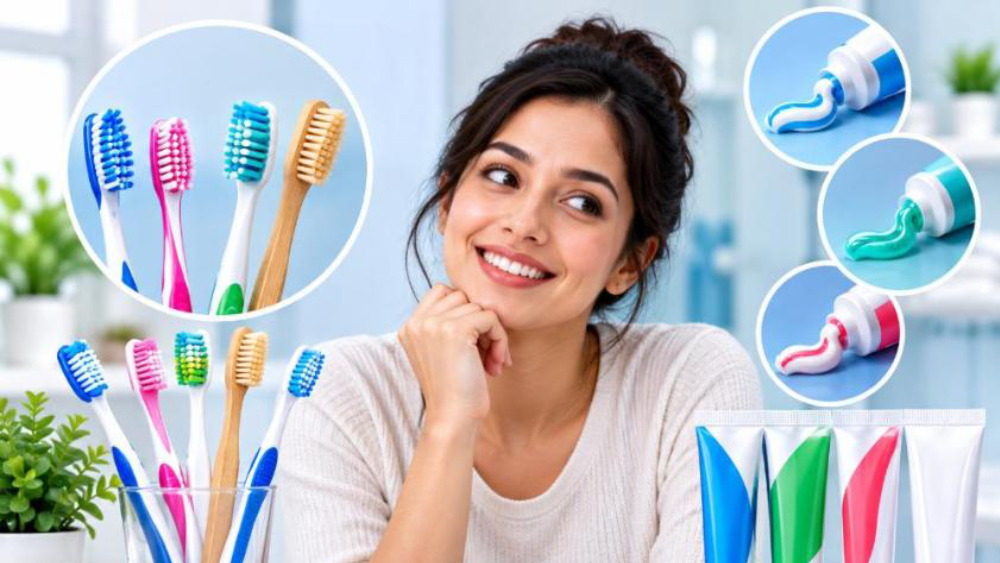
Maintaining good oral hygiene starts with the right toothbrush and toothpaste. Brushing your teeth twice a day is one of the simplest and most effective ways to remove plaque, prevent tooth decay and support healthy gums. However, choosing the right products can sometimes be confusing because there are many types of toothbrushes and toothpastes available.
The best choice depends on your oral health, age, brushing habits and specific dental needs. Here are some important factors to consider when choosing a toothbrush and toothpaste.
Choosing the Right Toothbrush
1. Choose Soft Bristles
For most people, a toothbrush with soft bristles is a good choice. Soft bristles can effectively remove plaque while being gentle on the teeth and gums. Medium or hard bristles may feel like they provide a deeper clean, but brushing aggressively with them can potentially irritate the gums or contribute to enamel wear.
The goal is not to brush harder but to brush correctly and gently.
2. Select the Right Size
A toothbrush should be comfortable to hold and should fit easily inside your mouth. A smaller or appropriately sized brush head can make it easier to reach the back teeth and other difficult-to-clean areas.
For children, choose a toothbrush specifically designed for their age group. Children’s toothbrushes generally have smaller heads and handles that are easier for small hands to grip.
3. Manual or Electric Toothbrush?
Both manual and electric toothbrushes can be effective when used correctly. An electric toothbrush may be helpful for people who have difficulty maintaining consistent brushing technique or brushing for the recommended duration.
Some electric toothbrushes include features such as timers and pressure sensors, which can encourage better brushing habits and help prevent excessive pressure.
However, an electric toothbrush is not essential for everyone. A manual toothbrush can also provide excellent cleaning when used properly.
4. Replace Your Toothbrush Regularly
Toothbrush bristles become worn over time and may lose their ability to clean effectively. As a general guideline, consider replacing your toothbrush or electric toothbrush head approximately every three months, or sooner if the bristles become frayed.
If you have recently recovered from an illness, replacing the toothbrush may also be worth considering, particularly if it has become worn or contaminated.
Choosing the Right Toothpaste
1. Look for Fluoride
Fluoride is one of the most important ingredients to look for in toothpaste. It helps strengthen tooth enamel and makes teeth more resistant to acid attacks that can cause cavities.
For most people, brushing twice daily with an appropriate fluoride toothpaste is an important part of preventing tooth decay.
2. Consider Your Dental Needs
Different toothpastes are formulated for different concerns. If you experience tooth sensitivity, a toothpaste specifically designed for sensitive teeth may help reduce discomfort when used regularly.
People who are more prone to cavities may benefit from discussing additional fluoride options with their dentist. If gum problems are a concern, your dentist may recommend a toothpaste or oral-care product suitable for your specific condition.
3. Be Careful With Whitening Toothpaste
Whitening toothpastes can help remove certain surface stains caused by foods, beverages and tobacco. However, they do not necessarily provide the same whitening effect as professional dental whitening treatments.
If you have sensitive teeth or enamel concerns, ask your dentist whether a whitening toothpaste is appropriate for you before using it regularly.
4. Avoid Choosing Toothpaste Only for Its Flavour
A fresh flavour can make brushing more enjoyable, but the ingredients and formulation are more important than taste. Choose a toothpaste that meets your oral health requirements and contains fluoride unless your dental professional has advised otherwise.
Toothbrush and Toothpaste for Children
Children need products appropriate for their age. Use a small, soft-bristled toothbrush that is comfortable for the child. Fluoride toothpaste is generally recommended for children, but the amount used should be age-appropriate.
Parents should supervise young children while brushing to ensure that they clean all areas properly and do not use excessive toothpaste. Your child’s dentist can provide guidance based on their age and individual risk of tooth decay.
Common Mistakes to Avoid
Even the best toothbrush and toothpaste cannot provide maximum benefits if brushing habits are poor. Avoid brushing too aggressively, as excessive pressure can irritate the gums and contribute to tooth wear.
Do not rush through brushing. Spend around two minutes cleaning your teeth twice a day, paying attention to the front, back and chewing surfaces.
It is also important to clean between your teeth regularly using dental floss or another interdental cleaning method recommended by your dentist. A toothbrush cannot effectively reach every space between the teeth.
When Should You Ask Your Dentist?
If you are unsure which toothbrush or toothpaste is suitable for you, speak with your dentist. Professional advice can be especially helpful if you have sensitive teeth, frequent cavities, gum problems, orthodontic appliances, dental restorations or other specific oral health concerns.
Your dentist can recommend products based on your individual needs rather than relying only on general recommendations.
Build a Better Oral Care Routine
Choosing the right toothbrush and toothpaste is an important part of maintaining a healthy smile, but consistency matters just as much. Select a soft-bristled toothbrush that fits comfortably in your mouth, use fluoride toothpaste and brush gently twice a day for around two minutes.
Replace your toothbrush regularly, clean between your teeth and maintain routine dental check-ups. With the right products and good daily habits, you can help protect your teeth and gums and maintain better oral health for years to come.