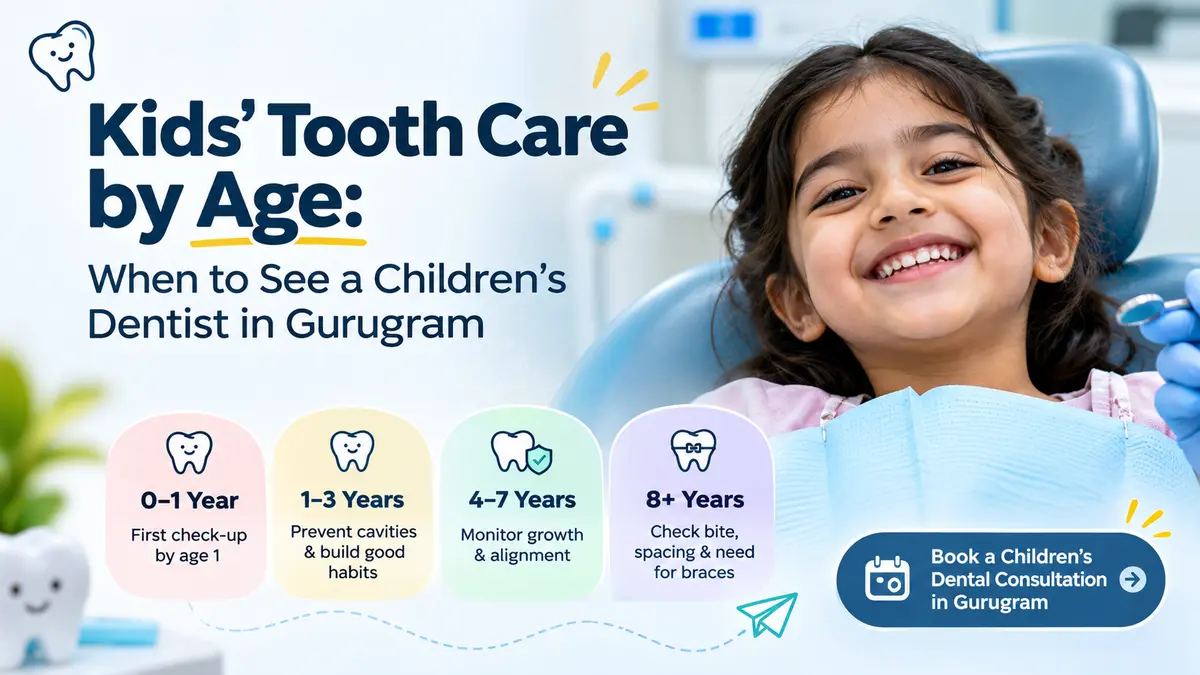
Children’s teeth change fast. A baby gets their first tooth around six months, has a full set of 20 milk teeth by about three, and starts losing them at six. Each stage needs different care, and each has its own warning signs.
This guide covers kids’ tooth care by age, from birth to 12 years: what to do at home, what to watch for, and when to book a visit with a kids dentist in Gurugram.
Kids’ tooth care by age: quick reference
| Age | What’s happening | Home care | Dental visit |
|---|---|---|---|
| 0 to 6 months | No teeth yet; gums developing | Wipe gums with a clean, damp cloth after feeds | Not needed unless you notice something unusual |
| 6 to 12 months | First teeth erupt, usually the lower front | Soft infant brush and a rice-grain smear of fluoride toothpaste, twice a day | First visit by age 1 |
| 1 to 3 years | Molars and canines arrive; all 20 milk teeth by about 3 | Rice-grain smear, twice a day; stop night-time bottle feeds | Every 6 months |
| 3 to 6 years | Full set of milk teeth; jaw growing | Pea-sized fluoride toothpaste; parent brushes, child helps; floss where teeth touch | Every 6 months; fluoride varnish if advised |
| 6 to 8 years | First permanent molars; front teeth start falling out | Parent supervises brushing; daily flossing | Every 6 months; sealants on new molars; orthodontic check by 7 |
| 9 to 12 years | Most milk teeth replaced; second molars by about 12 | Child brushes alone, parent checks; mouthguard for sports | Every 6 months; sealants on second molars; braces assessment if needed |
Birth to 6 months: care starts before the first tooth
Wipe your baby’s gums gently with a soft, damp cloth after feeds. This clears milk residue and gets your baby used to having their mouth cleaned.
Warning signs:
- White patches on the tongue or cheeks that don’t wipe off (possible oral thrush)
- A tooth already present at birth or in the first month
- Difficulty latching or feeding that could point to a tongue-tie
6 to 12 months: the first tooth arrives
Most babies get their first tooth, usually a lower front one, between six and ten months. Start brushing twice a day with a soft infant toothbrush and a smear of fluoride toothpaste no bigger than a grain of rice. Book the first dental visit now.
Warning signs:
- No teeth at all by 12 to 15 months
- Chalky white or brown lines near the gumline (early decay)
- High fever or diarrhoea during teething; these are not caused by teething and need your paediatrician
1 to 3 years: the toddler years
Molars and canines come through, and most children have all 20 milk teeth by age three. This is the peak age for early childhood caries, often called bottle tooth decay. Milk or juice left in the mouth overnight feeds the bacteria that cause it.
- Stop putting your child to sleep with a bottle of milk or juice
- Move from bottle to cup around the first birthday
- Keep sweets and biscuits to mealtimes, not all-day snacking
Warning signs:
- Brown or black spots on the upper front teeth
- Your child refuses to chew on one side or cries while eating
- Swelling or a pimple-like bump on the gums
- A fall that chips, loosens or darkens a tooth
3 to 6 years: building habits
Switch to a pea-sized amount of fluoride toothpaste. Your child can hold the brush, but you should still brush for them, since young children can’t clean properly on their own. Start flossing wherever two teeth touch.
Milk teeth matter even though they fall out. They hold space for permanent teeth, help with speech, and let your child chew properly. Losing one early to decay can make the adult teeth come in crooked.
Warning signs:
- Thumb-sucking or pacifier use continuing past age 4
- Teeth that look crowded, or upper and lower teeth that don’t meet properly
- Bad breath that doesn’t go away with brushing
- Sensitivity to cold or sweet foods
6 to 8 years: the first permanent teeth
The first permanent molars come in behind the milk teeth around age six. Many parents miss them because no tooth fell out to make room. These molars have deep grooves that trap food, so ask your dentist about dental sealants. Front teeth also start falling out now.
An orthodontic check by age seven helps spot bite and jaw problems early, when they are easier to correct.
Warning signs:
- A permanent tooth coming in behind a milk tooth that hasn’t fallen out (“shark teeth”)
- A milk tooth lost far earlier than the others, especially from decay or injury
- Decay on the new permanent molars
- Mouth breathing or snoring
9 to 12 years: the pre-teen years
Most milk teeth are replaced by 12, and the second permanent molars arrive around then. Your child can brush alone, but check their teeth from time to time. Sealants on the new molars help, and a mouthguard is a must for cricket, football, skating or martial arts.
Warning signs:
- Crooked or overlapping teeth, or a visible overbite or underbite
- Bleeding gums when brushing
- Frequent sugary drinks, energy drinks or snacking
- A knocked-out permanent tooth: hold it by the crown, keep it in milk, and see a dentist within 30 minutes
Paediatric dentist vs paediatrician: what’s the difference?
A paediatrician looks after your child’s overall health. A paediatric dentist (also called a pedodontist) looks after your child’s teeth, gums and jaw. Both are children’s specialists, but they train for different things.
| Paediatrician | Paediatric dentist | |
|---|---|---|
| Training in India | MBBS, then MD or DNB in Paediatrics | BDS, then MDS in Paediatric and Preventive Dentistry |
| Focus | Growth, vaccines, fevers, infections, overall development | Teeth, gums, bite, jaw growth, dental habits |
| Typical visits | Vaccinations, illness, growth checks | Check-ups, cleaning, fillings, sealants, fluoride, dental injuries |
| Treats cavities? | No | Yes |
Your paediatrician may glance at your child’s teeth during a check-up, but they can’t clean, fill or seal them. For anything inside the mouth, see a children’s dentist. If you’re worried about how your little one will react, read our guide on preparing your child for their first dental visit.
When to see a children’s dentist in Gurugram
Book a routine visit every six months from the first birthday. Don’t wait for the next check-up if you notice any of these:
- Toothache, or your child avoids chewing on one side
- Spots, holes or discolouration on any tooth
- Swollen, bleeding or pus-filled gums
- A chipped, loose or knocked-out tooth after a fall
- Permanent teeth coming in crooked or behind milk teeth
- Thumb-sucking past age 4, mouth breathing or snoring
A knocked-out permanent tooth, facial swelling, or a fever with tooth pain needs same-day care.
Children’s dental care at Petal Smiles
Petal Smiles is a dental and paediatric clinic at Eros City Square, Sector 49, Gurugram, open every day from 10 AM to 8:30 PM. Children’s dental treatment is handled by our paediatric dentist, one of our dental specialists, and our paediatrician Dr. Sunisha Arora looks after children’s general health under the same roof.
Looking for a kids dentist in Gurugram? Book your child’s check-up or call +91 95410 93573.
Questions patients ask us
At what age should my child first see a dentist?
By the first birthday, or within six months of the first tooth, whichever comes first. Early visits catch decay before it hurts and get your child comfortable with the dentist.
Is fluoride toothpaste safe for babies?
Yes, in the right amount. Use a rice-grain smear from the first tooth until age three, then a pea-sized amount from three to six. Teach your child to spit, not swallow.
Do milk teeth really need fillings if they'll fall out anyway?
Yes. Some back milk teeth stay until age 10 to 12. An untreated cavity can cause pain and infection, and losing a tooth early can make permanent teeth come in crooked.
How often should kids get a dental check-up?
Every six months for most children. Your dentist may suggest more frequent visits if your child is prone to cavities.
What are dental sealants, and does my child need them?
Sealants are thin protective coatings painted onto the chewing surfaces of back teeth. They are usually applied when the permanent molars come in, around ages 6 to 7 and 11 to 13.
How do I find a good children's dentist in Gurugram?
Look for a dentist with paediatric training, a child-friendly clinic and a focus on prevention, not just treatment. Ask who will see your child and how they handle a very young or nervous child.
Sources
ADA MouthHealthy: First dental visit ↗ADA MouthHealthy: Sealants ↗Last updated 12 November 2026.