


Root canal treatment is a common dental procedure used to save a tooth that has become severely damaged or infected. Many people feel anxious when they hear the term “root canal,” but modern dental techniques have made the procedure much more comfortable and predictable. Understanding when root canal treatment is needed can help you recognise warning signs and seek dental care at the right time.
What Is Root Canal Treatment?
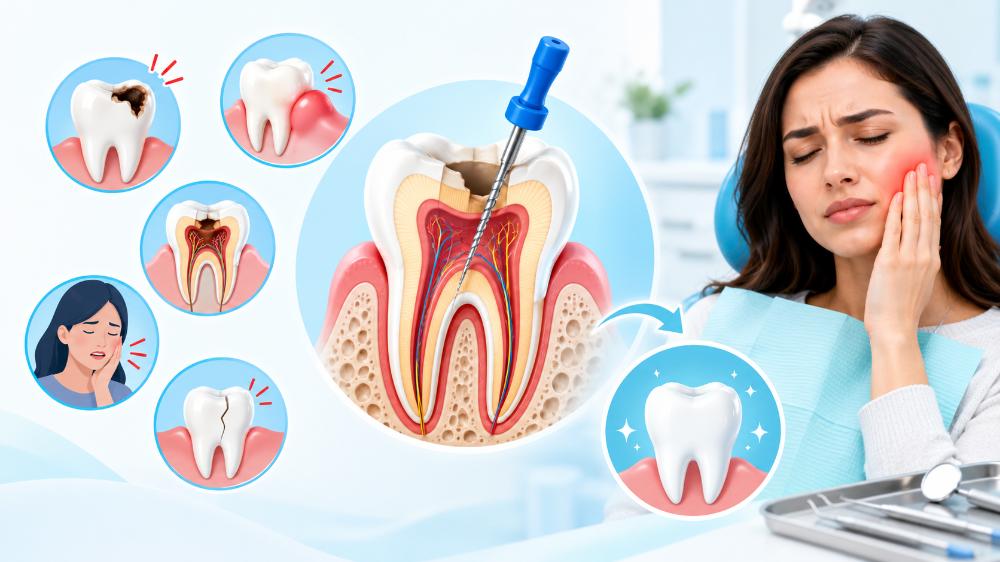
Inside every tooth is a soft tissue called the dental pulp. It contains nerves and blood vessels and helps support the development of the tooth. When bacteria reach the pulp because of deep decay, cracks, trauma or repeated dental procedures, the tissue can become inflamed or infected.
Root canal treatment involves removing the infected or damaged pulp, carefully cleaning and disinfecting the inside of the tooth, and then sealing it to prevent further infection. The tooth is subsequently restored, often with a dental crown, to help protect it and restore its function.
When Is a Root Canal Needed?
A root canal is generally recommended when the dental pulp has become irreversibly inflamed or infected. Several conditions can lead to this problem.
1. Deep Tooth Decay
An untreated cavity can gradually move through the enamel and dentin until it reaches the pulp. Once bacteria enter the pulp, inflammation or infection may develop. At this stage, simply placing a filling may not be sufficient, and root canal treatment may be required to save the tooth.
2. Persistent Tooth Pain
Severe or persistent toothache can be a warning sign of pulp inflammation or infection. Pain may occur spontaneously, while chewing or when consuming hot or cold foods and drinks. In some cases, discomfort may continue even after the source of heat or cold has been removed.
3. Prolonged Sensitivity
Temporary sensitivity does not always indicate the need for a root canal. However, sensitivity that is intense or continues for a prolonged period after exposure to hot or cold foods may indicate damage to the dental pulp. A dentist can determine the underlying cause through an examination and, when required, dental imaging.
4. Dental Trauma
A tooth can suffer internal damage after an accident, sports injury or other form of trauma. Even if the tooth does not appear badly damaged from the outside, the pulp may be affected. In some cases, the pulp can become infected or die following an injury, making root canal treatment necessary.
5. Cracked or Broken Teeth
A deep crack or fracture can allow bacteria to enter the inner part of a tooth. Depending on the location and extent of the damage, root canal treatment may be required before the tooth can be restored.
6. Swelling or Dental Abscess
An infection inside a tooth can spread into the surrounding tissues and cause swelling or an abscess. Other symptoms may include tenderness, a bad taste in the mouth, fever or a small pimple-like swelling on the gums. Such symptoms require prompt dental evaluation.
What Happens During Root Canal Treatment?
Before beginning treatment, the dentist examines the affected tooth and may take an X-ray to understand the extent of the infection. Local anaesthesia is then used to numb the tooth and surrounding area.
The dentist creates a small opening in the tooth to access the infected pulp. The damaged tissue is removed, and the root canals are cleaned and disinfected. The canals are then filled and sealed to prevent bacteria from entering again.
After the root canal procedure, the tooth may require a permanent restoration. A crown is often recommended for teeth that have lost significant structure because it can help protect the tooth from further damage.
Is Root Canal Treatment Painful?
The procedure is performed under local anaesthesia, so patients generally should not feel significant pain during treatment. Some tenderness or mild discomfort may occur for a few days afterward. Your dentist can provide appropriate advice for managing post-treatment discomfort.
In fact, root canal treatment is often performed to relieve the pain caused by an infected or inflamed tooth rather than cause additional pain.
Why Is Timely Treatment Important?
Delaying treatment can allow an infection to progress and potentially affect the tissues surrounding the tooth. In advanced cases, the infection may lead to an abscess, bone damage or the eventual loss of the tooth.
Treating the problem early can increase the chances of preserving the natural tooth and avoiding more extensive dental procedures.
How Can You Reduce the Risk of Root Canal Problems?
Good oral hygiene can help prevent many conditions that lead to root canal treatment. Brush twice daily with fluoride toothpaste, clean between your teeth every day, limit frequent consumption of sugary foods and drinks, and visit your dentist regularly.
If you participate in contact sports, wearing a properly fitted mouthguard can also help protect your teeth from injury.
When Should You Visit a Dentist?
If you experience persistent toothache, prolonged sensitivity, pain while chewing, swelling, a damaged tooth or signs of an abscess, consult a dentist promptly. Not every toothache requires a root canal, so professional diagnosis is important before deciding on treatment.
Protect Your Natural Tooth
Root canal treatment can be an effective way to treat an infected or severely damaged tooth while preserving your natural smile. Recognising symptoms early and seeking professional dental care can make a significant difference in protecting your oral health. Regular dental check-ups and good daily hygiene remain the best ways to prevent problems from progressing to the point where root canal treatment is needed.